


Global cryptocurrency markets plunged again late Friday after US President Donald Trump announced sweeping new tariffs and export restrictions against China, sending tensions to their highest point since 2019.
In a statement posted online, President Trump said the United States would impose 100% tariffs on all imports from China starting November 1, citing Beijing’s “extremely aggressive” move to impose sweeping export controls on “virtually every product made in China.”
Sponsored Sponsored
US and China enter biggest trade war since 2019
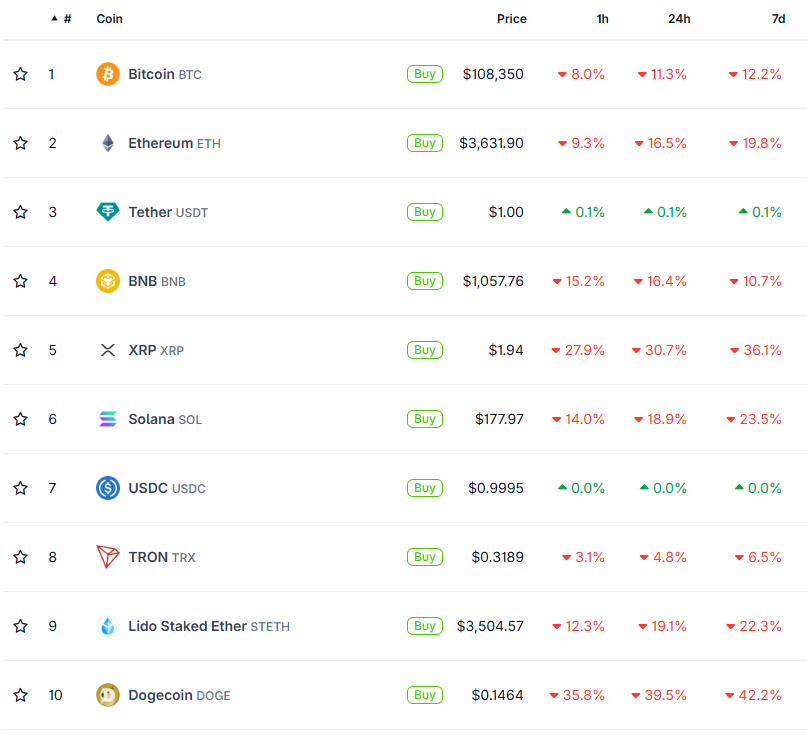
This announcement caused immediate market confusion. Within hours, the market capitalization of cryptocurrencies fell from about $4.25 trillion to $4.05 trillion, wiping out nearly $200 billion in value, according to CoinGecko.
Bitcoin plummeted 10% from $122,000 to $107,000. Ethereum, XRP, and BNB fell over 15%.
This second wave of losses came just hours after Trump canceled a scheduled meeting with Chinese President Xi Jinping in an earlier post and signaled a “massive” increase in tariffs.
This initial statement triggered the first major sell-off, wiping out approximately $125 billion in crypto value and more than $800 million in leveraged positions.
Sponsored Sponsored
But the latest declaration signals a shift from rhetoric to policy, doubling tariffs to unprecedented levels and extending the dispute to software and technology regulation.
The move effectively confirms a full-blown trade conflict, triggering a broader “risk-off” retreat across stocks, commodities and digital assets.
Market players have warned that the combined impact of tariffs and export controls could strain global technology supply chains, particularly semiconductor, AI and blockchain infrastructure, deepening uncertainty for sectors that support digital assets.
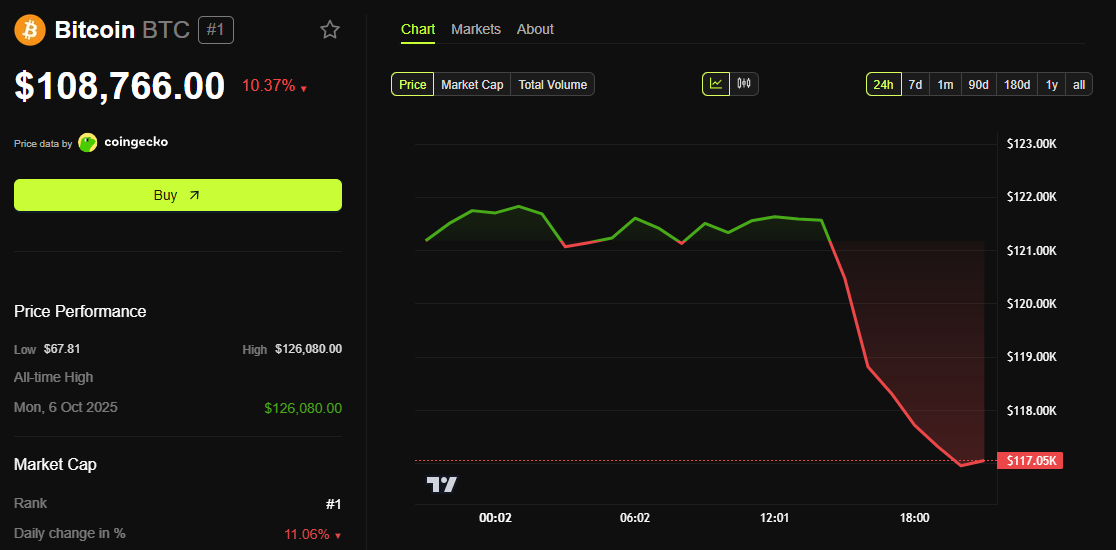
The timing of this escalation caught the market by surprise and increased pressure to liquidate leveraged positions.
Bitcoin’s decline is currently testing key psychological levels, while altcoins continue to underperform amid concentrated selling.
For now, traders are bracing for a volatile weekend. The next direction for the market will depend on whether Beijing responds in kind or indicates its intention to restart negotiations by November 1.
