

How to Read Crypto Charts
Having ever looked at a crypto chart and been baffled by it, one is not isolated. The numbers, colors and lines are not very easy to understand, at first sight. But learning how to read crypto charts is the key to understanding market trends and making better investment choices. This is a skill that will make you make better decisions rather than assumptions regardless of whether you are investing in the long term or trading on a day to day basis. This guide would take you to the fundamental educational steps of cryptocurrency charts. You will not only be taught how to read the patterns, indicators, and what the market is saying to you but in simple language.

What Are Crypto Charts?
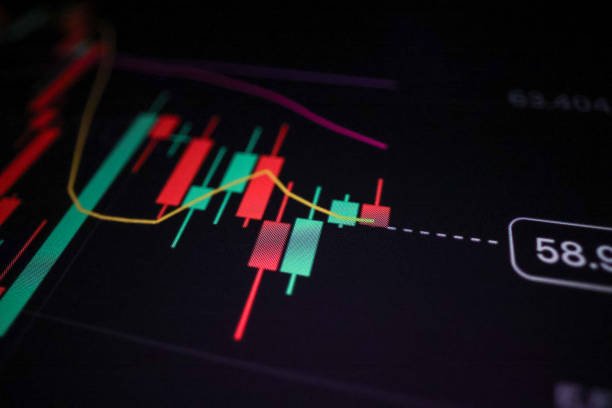
These graphs aid a trader in following the market trends and getting a signal on whether to purchase or sell. The vast majority of crypto charts are presented as candlestick price data, which display the opening price, closing price, high price, and low price of a certain time.
Types of Crypto Charts
When learning how to read crypto charts, you’ll come across several types. There is a style and purpose of each.
1. Line Chart:
The simplest type. It correlates the closing prices and a line. Very simple-minded and quick to get a feel of the price trends.
2. Bar Chart:
Shows opening, closing, high and low prices of each time period. Fairly detailed like a shadow of a line chart.
3. Candlestick Chart:
Most traders favored the following chart. Each candle represents the direction the price went over a particular time. Green candles indicate an increment of prices, whereas the red candles demonstrate a fall in price. Once you know how to read crypto charts, you’ll find candlestick charts the most useful.
Candlestick Chart Interpretation.
Candlestick patterns form the foundation of how to read crypto charts effectively. Every candle narrates a tale of the market psychology; who is in charge; it is either buyers or sellers.
Some bullish candles include;
- Bullish Candle: The price finishes higher than it started.
- Bearish Candle: Price is less at the closing than it was at the beginning.
- Doji Candle: There is uncertainty depicted because the price of opening and closing is nearly the same.
You can predict possible price reversals by identifying identifying patterns such as Hammer, Shooting Star or Engulfing. That’s the essence of how to read crypto charts like a pro.
Time Frames and Trends
Addressing the problem of crypto markets, it is the period to consider. Novices commonly ask themselves what chart to walk: hourly, daily or weekly. The question is based on what you want to achieve. Day traders tend to use short-term charts (1-minute down to 1-hour), whereas long-term investors use daily or weekly charts. Understanding trends is another part of how to read crypto charts. A trend merely represents the overall movement of the price up, down, or laterally.
- Uptrend: Prices are rising. Search towards greater maximums and greater minimums.
- Downward trend: The costs are on the decline. On the lookout of better bottoms and better tops.
- Sideways Trend: The price moves in a directional manner, and it indicates market imprecision.
Level of Support and Resistance.
Support and resistance are key concepts in how to read crypto charts.
- Support: This level of price is when demand is such that the price cannot fall any further.
- Resistance: This is a stage at which prices are not able to increase further due to the pressure to sell.
These degrees become some sort of deterrents. When the markets burst above the resistance or below the support, then tend to indicate possible trend reversal. By knowing how to spot these points you can achieve a better entry and exit point.
Using Indicators and Tools
Technical indicators make how to read crypto charts more powerful. They assist in the confirmation of patterns and enhance the accuracy. Among others, some of the commonly used indicators are:
- Moving Averages (MA): Indicates a mean price of a certain time interval, and it smoothes out the short-term movements.
These instruments are effective subordinately to price action analysis. Keep in mind never to use a single measure.
Volume: The Hidden Clue
Another essential part of how to read crypto charts is volume. The volume presents the amount of a cryptocurrency that has been exchanged over a given time. High volume tends to indicate that the industry is interested in the market, which is a risky confirmation that the price move is strong. The low volume can indicate the uncertainty or frailty. As an illustration, high volume price breakout is more valid than low volume price breakout.
Market Sentiment and Psychology.
Human feeling is the secret behind any movement in the chart. Understanding sentiment is part of how to read crypto charts effectively. The market is motivated by fear and greed. As human beings get panicked, prices go down. An increase in optimism will cause prices to increase.
- Common Mistakes to Avoid
- The use of only one indicator is not sufficient.
- Failure to recognize the general market trend.
- Over-trading due to the short-term movements.
- Allowing emotions to guide the decision making.
These can be traps which can be avoided though patience and discipline. Confidence is developed as a result of consistency.
Conclusion
Understanding how to read crypto charts is not as hard as it seems. As practice takes place, you will begin to notice patterns and trends all by itself. Easy equipment, market feeling and discipline. It is important to bear in mind that charts are not what will happen to you in the future, they serve as your guide in understanding the present.

FAQs
How long does it take to learn how to read crypto charts?
It will be considered by the amount of time you spend.
Do I require a higher study of mathematics in order to read cryptic charts?
No. Mastering how to read crypto charts takes time and dedication. The more you analyse the more patterns can be observed. Go big by going small, get gradually learned, and have confidence in the process.
