

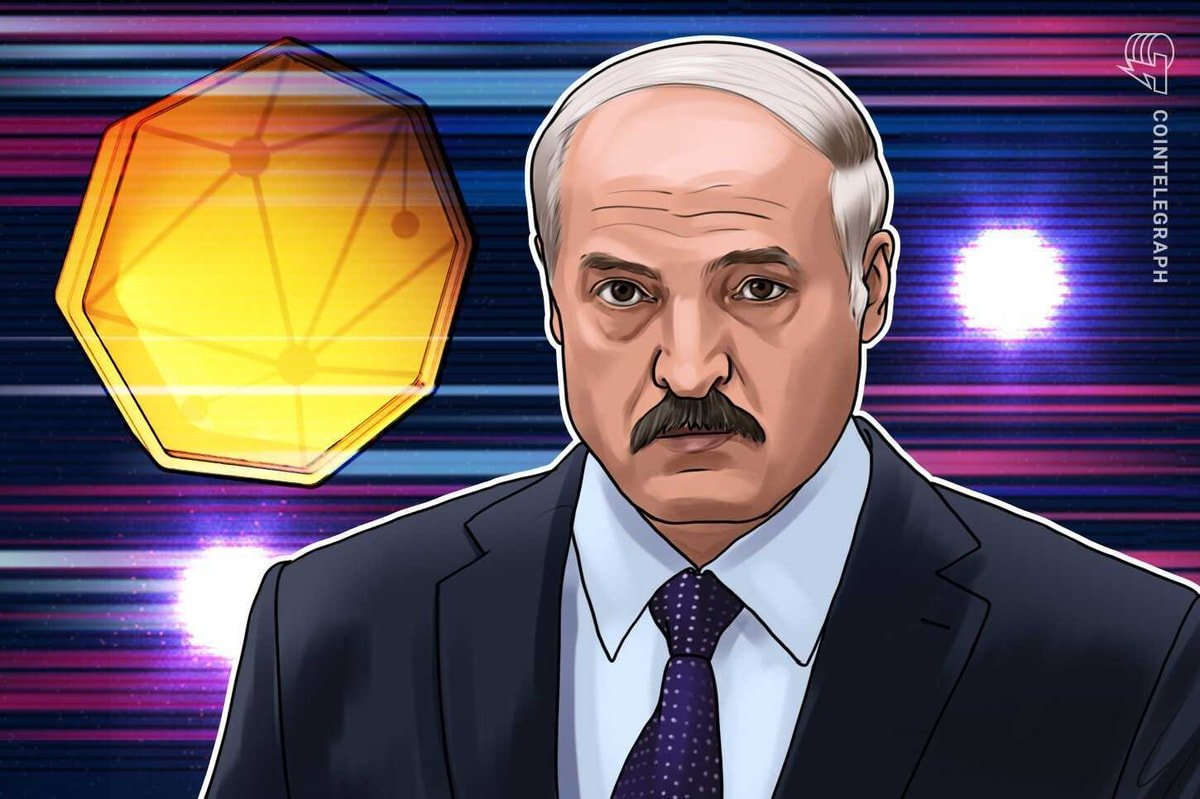
Belarusian President Alexander Lukashenko reportedly urged the country’s banks to expand the way they use codes, acknowledging that sanctions had a major impact on the economy.
Lukashenko told the head of Belarus’ central and commercial banks that the use of digital tokens needs to be expanded, the state-owned Belarusian telegraph agency reported on Tuesday.
“For the past five years, the national economy and therefore the banking sector in Belarus have faced unprecedented challenges,” Lukashenko said. “The government and national banks have been given corresponding instructions. Now, the law.”
Lukashenko’s latest push comes days after he told lawmakers on Friday to create transparent rules for the country’s cryptocurrency market.
Due to its anonymous and decentralized nature, cryptocurrencies have been used in other ways by countries, particularly Russia and North Korea, to avoid sanctions and exercise trade.
Payments via Belarus’ crypto exchanges could exceed $3 billion
The total number of crypto users in Belarus is expected to exceed 9.1 million by 2026, with over 855,000 people, but user intrusions are projected to increase to 9.57%, according to online data platform Statista.
Lukashenko claims that all domestically active exchanges, including Binance, Okx and Kucoin, could double with external payments by the end of the year.
“Today, cryptocurrency-based transactions are more active than ever, and their role in driving payments is growing,” he said.
“In the seven months this year, the amount of external payments via cryptocurrency exchanges has reached $1.7 billion. Experts estimate it could reach $3 billion by the end of the year.”
Last September, Lukashenko signed a law prohibiting individuals from buying and selling cryptocurrency outside of Belarus’ exchanges.
Another push in a digital payment system
Lukashenko also told bank leaders to increase adoption of digital payment systems after “starting with QR codes” and to launch instant payment systems by the end of the year.
VTB Bank Belarus, a majority state-owned bank in Russia, has begun offering customer payment options using a QR code directly connected to the online payment system ERIP.
Lukashenko said the country’s digital strategy should prioritize adoption of biometric technology, reduce reliance on external service providers, and establish dedicated IT companies to integrate artificial intelligence-based solutions.
Related: Putin’s advisors claim us using Stablecoins, Gold to underestimate 37T’s debt
“Banks need to try to make the most of modern technology. Digitalisation is not an objective in itself; it has to bring about concrete economic outcomes,” he added.
Belarus’ Cryptographic Attitudes
Belarus’ attitudes towards Crypto have been somewhat mixed in the past. In March, Lukashenko instructed the Energy Minister to begin developing the country’s cryptocurrency mining industry as the country’s electricity was overabundant.
In the summer of 2023, the Belarus province was working to ban peer-to-peer transactions in cryptographic codes such as Bitcoin (BTC).
However, the country legalized crypto transactions in 2018, allowing them to be sold, exchanged and mined.
Magazine: All of these six global crypto hubs have something in common…
